Loading...

Loading...

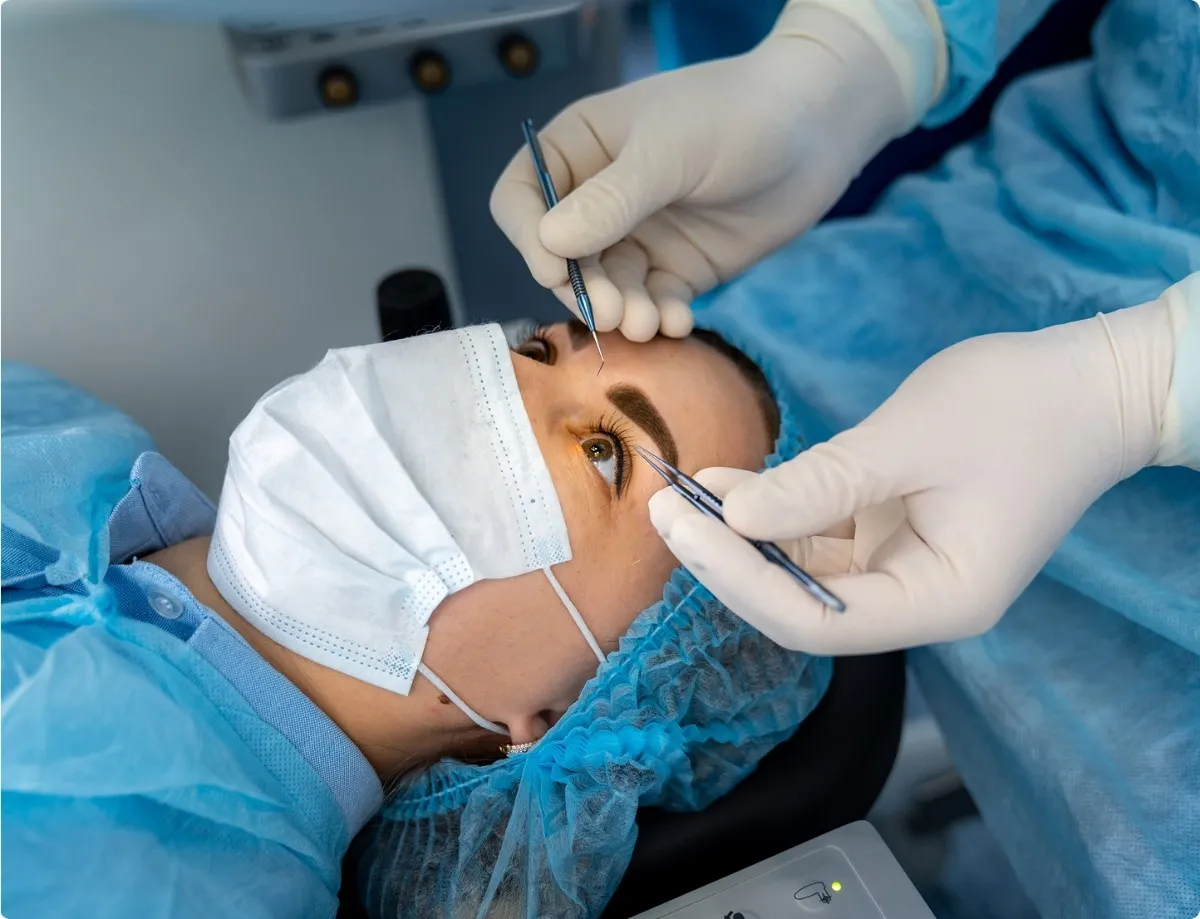
At Skyline Hospitals, we understand that clear vision is deeply connected to quality of life. Whether it is reading with ease, driving with confidence, or simply enjoying everyday moments without the constant reliance on glasses, lens replacement surgery offers a sophisticated, long-term solution tailored to you.
Also known as refractive lens exchange, lens replacement surgery involves replacing the eye’s natural lens with an advanced artificial lens selected around your individual vision needs and lifestyle. For many patients, it is an opportunity not only to improve sight, but to regain a greater sense of ease, freedom, and confidence.
Our consultant-led ophthalmology service combines clinical excellence with a highly personalised approach. From your first consultation through to your recovery, every detail of your care is designed to feel seamless, reassuring, and entirely centred around you.

TAKE THE FIRST STEP
We’ll Help You Determine the Right Path, Gently.
Lens replacement surgery is an advanced procedure designed to improve the quality of your vision by replacing the eye’s natural lens with a premium intraocular lens. It is often chosen by patients seeking greater freedom from glasses and a lasting solution to age-related changes in vision.
For many people, these changes develop gradually. Reading becomes less comfortable, glasses prescriptions become more complex, and visual clarity no longer feels as effortless as it once did. Lens replacement surgery offers an elegant and effective answer, particularly for those who may not be ideal candidates for laser eye surgery.
Choosing lens replacement surgery is a personal decision, and where you have your treatment matters. At Skyline Hospitals, patients benefit from:
Lens replacement surgery can offer a meaningful improvement in the way you experience everyday life. For many patients, the appeal lies not only in clearer sight, but in the convenience and confidence that come with reduced dependence on glasses or contact lenses. Treatment is tailored with precision, allowing your visual outcomes to reflect your individual priorities and lifestyle.
Potential benefits include:
Lens replacement surgery may be particularly well suited to you if:
The most appropriate way to assess suitability is through a detailed consultation, where your consultant can understand both your eye health and your personal goals for treatment.
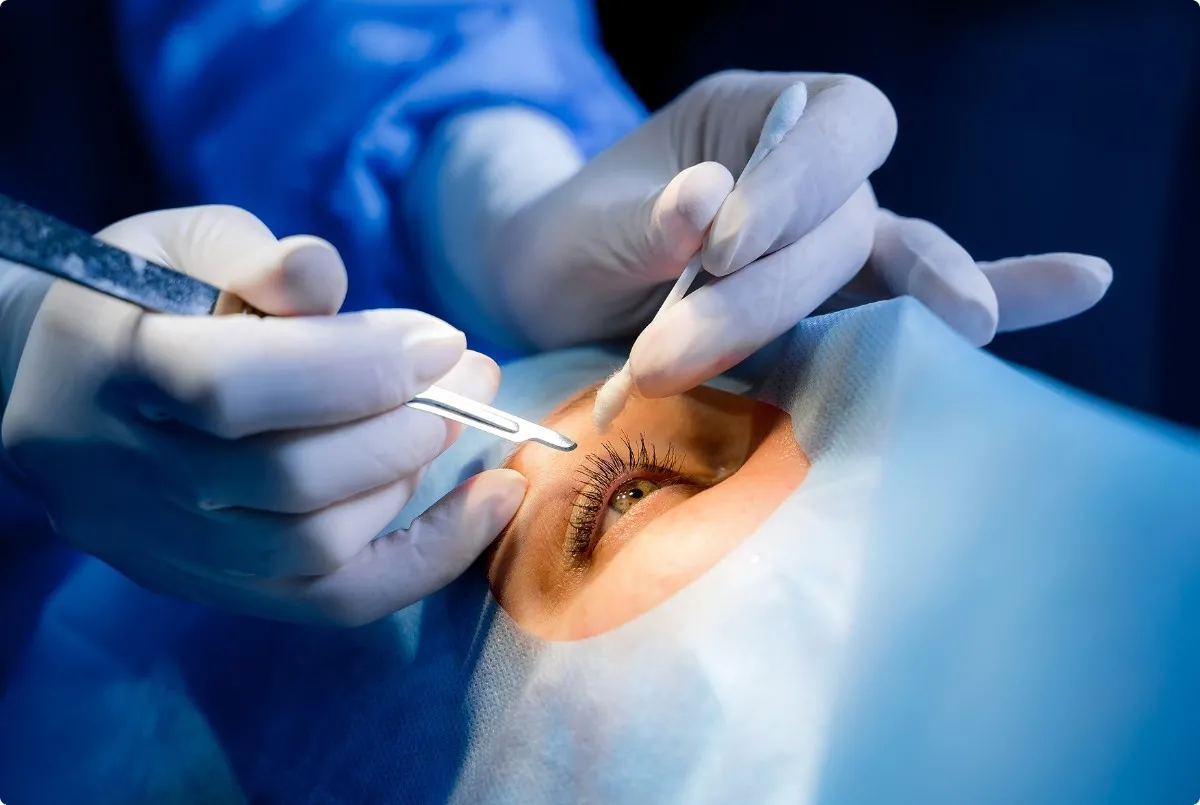
A key part of lens replacement surgery is choosing the lens that best supports the way you live, work, and use your vision every day. At Skyline Hospitals, lens selection is approached with care, precision, and a clear understanding that no two patients have exactly the same visual priorities. During your assessment, we carry out detailed measurements of the eye to help determine which lens option is most suitable. This may include analysing your prescription, corneal shape, eye length, astigmatism, pupil behaviour, and the overall health of the retina and ocular surface. These measurements help your consultant recommend the lens technology most appropriate for your eyes and the visual outcome you hope to achieve. Modern intraocular lenses are designed with different optical properties, and each type offers its own advantages depending on whether your priority is crisp distance vision, reduced dependence on reading glasses, correction of astigmatism, or a greater range of functional vision across multiple distances.
Monofocal lenses are designed to provide clear focus at one main distance. For most patients, this is set for distance vision, which can support activities such as driving, walking, and watching television with reduced dependence on glasses. These lenses have a single focal point, which means glasses are still often needed for reading or close-up work. Monofocal lenses are often chosen by patients who want excellent quality of vision at one distance and prefer a simpler optical design. They can also be used in monovision or blended vision strategies, where one eye is targeted slightly differently from the other to increase the range of vision, although suitability for this approach varies from patient to patient.
Multifocal lenses are designed to provide vision at more than one distance, typically helping with distance, intermediate, and near tasks. They work by distributing light across multiple focal points, allowing the brain to adapt to a broader visual range.
For many patients, this can mean greater freedom from glasses for activities such as reading, using a phone, working on a screen, and seeing clearly in the distance. Multifocal lenses are often attractive to patients seeking the highest possible level of spectacle independence.
However, because light is split between focal points, some patients may notice visual phenomena such as halos or glare around lights, particularly at night. This is why careful patient selection and detailed pre-operative discussion are so important.
Extended Depth of Focus (EDOF) lenses are designed to create a continuous range of vision rather than distinct focal points. Instead of splitting light in the same way as a traditional multifocal lens, an EDOF lens aims to elongate the focus, providing smoother visual transition between distance and intermediate vision, with some near vision benefit depending on the lens design.
EDOF lenses are often well suited to patients who want greater visual range than a monofocal lens can offer, but who may prefer fewer optical side effects than can sometimes occur with multifocal technology. They can be particularly beneficial for activities such as driving, computer use, social interaction, and many day-to-day tasks that rely on strong distance and intermediate vision.
Some patients may still require reading glasses for very small print or prolonged close work, but EDOF lenses can offer an excellent balance between visual quality, range, and reduced spectacle dependence.
Toric lenses are designed to correct astigmatism, which occurs when the front surface of the eye has an irregular curvature that causes blurred or distorted vision. If significant astigmatism is present and not corrected during lens replacement surgery, vision may remain less sharp than expected afterwards.
A toric lens is aligned very precisely within the eye to neutralise the astigmatic error. These lenses can be combined with monofocal, multifocal, or EDOF technology depending on your prescription and treatment goals.
The accuracy of toric lens planning depends on detailed pre-operative measurements, and your consultant will assess whether this option is appropriate for achieving the clearest and most balanced result.
Choosing the right lens is not simply about selecting the most advanced technology. It is about choosing the lens that is most appropriate for your eyes, your daily routine, and your expectations.
Some patients prioritise the sharpest possible distance vision. Others want greater freedom from glasses across multiple distances. Some are happy to use reading glasses occasionally in exchange for certain visual advantages, while others are looking for the broadest possible range of unaided vision. Your consultant will explain the likely benefits and limitations of each option in clear, practical terms, so that your treatment plan feels genuinely tailored to you. At Skyline Hospitals, our aim is to deliver a result that is not only clinically precise, but aligned with the way you want to live.
We appreciate that any form of eye surgery deserves thoughtful explanation and expert reassurance. Lens replacement surgery at Skyline Hospitals is delivered with precision, calm, and meticulous attention to comfort.
The procedure is typically performed as a day-case treatment under local anaesthetic. It is usually straightforward and efficient, allowing most patients to return home the same day.
Throughout your visit, our team will ensure you feel informed, at ease, and exceptionally well cared for.
Exceptional care continues well beyond the procedure itself. Recovery following lens replacement surgery is usually smooth, and our team remains closely involved to ensure you feel supported at every stage.
You will receive a clear aftercare plan, including eye drops, guidance on returning to normal activities, and scheduled follow-up appointments to monitor your progress.
Many patients notice a meaningful improvement in vision within a short time, with further refinement as the eyes settle.
Lens replacement surgery is not simply about reducing dependence on glasses. For many patients, it is about enhancing day-to-day life with clearer, more effortless vision designed around how they live, work, and spend their time.
Your assessment is designed to be both clinically thorough and highly personal. Alongside detailed diagnostic testing, we take time to understand your lifestyle, priorities, and expectations so that every aspect of your treatment is carefully tailored.

Mr. Bal Manoj Mr. B. Ilango
Our consultant ophthalmologists are well known names in the region not only for their expertise, but for their commitment to delivering exceptional, patient-centred private care.



At Skyline Hospitals, we believe private care should be as transparent as it is exceptional.
Your final price will depend on your individual treatment plan, the lens selected, and whether treatment is required for one or both eyes.
Lens replacement surgery is a procedure that replaces your eye’s natural lens with an artificial lens to improve vision and reduce dependence on glasses. It is often chosen by patients who want a long-term solution for age-related changes in vision, including reading vision problems.

Lens replacement surgery at Skyline Hospitals is designed for patients who value expertise, precision, and a highly personalised standard of care. From your first consultation to your recovery, every part of your experience is shaped around clinical excellence, comfort, and confidence. If you are considering lens replacement surgery, our team is here to provide clear guidance and exceptional private care at every stage.